


In Part 1, we explored the legal context and integration scenarios for SAP GTS and SAP S/4HANA. This second part focuses on the operational flow after goods receipt: how import declarations are handled and how the putaway process works technically when EWM joins the picture.
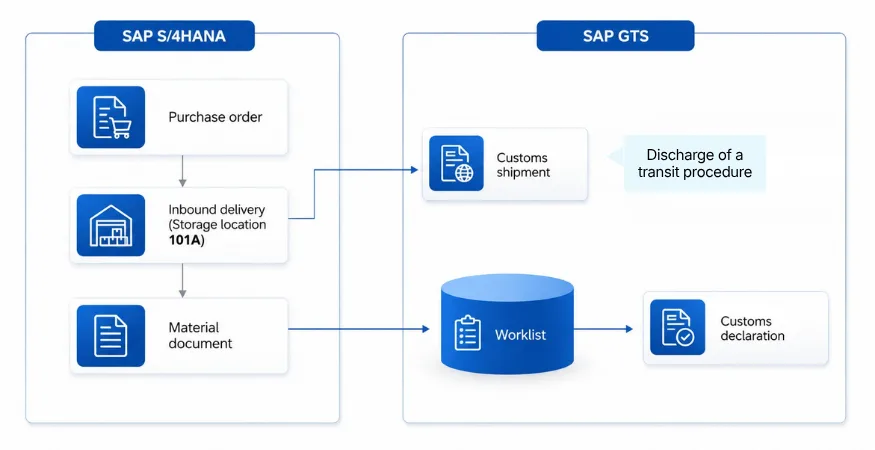
When SAP EWM is not part of the process, the inbound delivery in SAP S/4HANA triggers a customs shipment in SAP GTS to discharge the transit procedure in case of duty unpaid goods movement. After posting the goods receipt (movement type 101), a material document is created and transferred to GTS. From this document, GTS generates the import declaration and submits it electronically to customs. Once declared, the goods are available for picking immediately—there is no warehouse-level control.
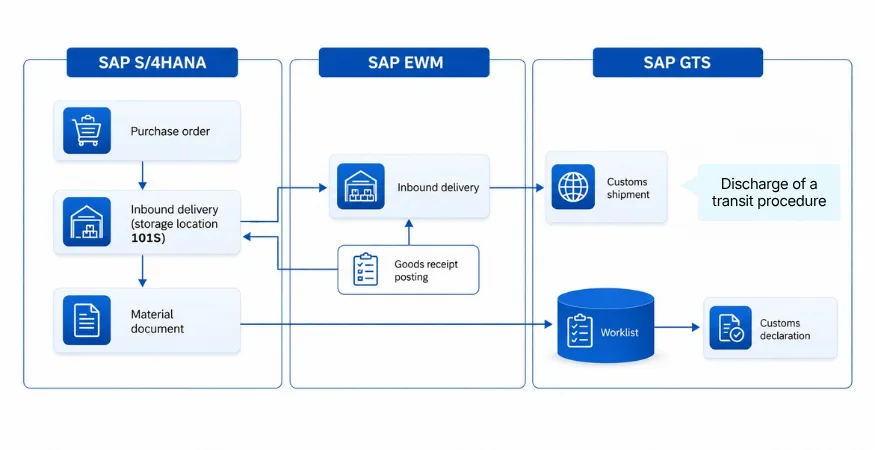
When SAP EWM is integrated, the process changes significantly. The inbound delivery is distributed to EWM, creating an EWM inbound delivery. The MRN (Master Reference Number) of the transit procedure is entered in EWM, and the system assigns stock type C, meaning the goods are customs-controlled and blocked. They cannot move or be picked until they are declared under a customs procedure. Once GTS confirms that the goods are released for the chosen customs procedure, EWM updates the stock type to F = Free, lifting the block and enabling picking and outbound processes. This integration ensures compliance by preventing unauthorized movements of non-Union goods.
Note: This article focuses on import declaration after goods receipt. SAP GTS also supports declaration creation based on the purchase order or inbound delivery, which are standard scenarios but not covered here. Additional Integration: SAP TM (Transportation Management) can also be integrated into this process for planning and execution of inbound freight, providing end-to-end visibility from transport planning to customs clearance and warehouse operations.
The integration relies on real-time communication via RFC calls. GTS sends an arrival notification to customs and waits for the unloading permission. When permission is received, GTS updates the customs shipment status and triggers EWM to release the inbound delivery. Only then can warehouse operations proceed: unloading, goods receipt posting, and putaway. This technical handshake between systems guarantees that logistics execution aligns with customs law and prevents premature handling of goods.
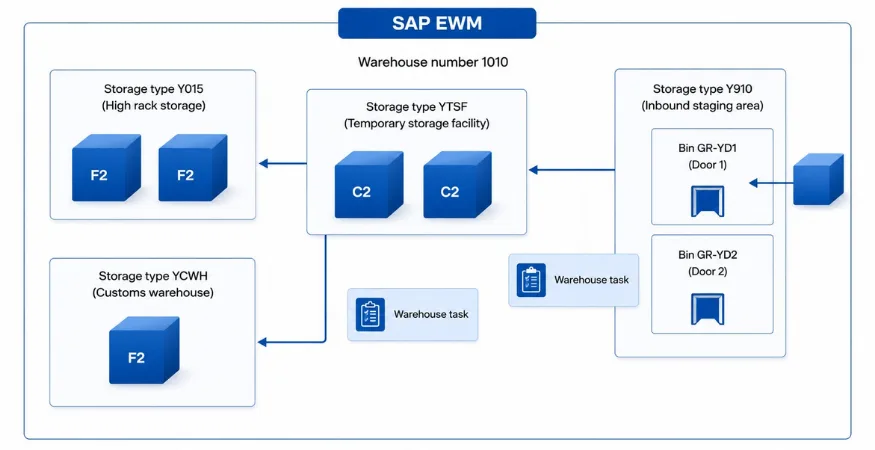
Once the block is lifted, EWM executes the physical and system steps:
Key technical points:
Integrating SAP GTS and EWM is not just a technical exercise—it enforces customs compliance at the operational level. By blocking movements until customs clearance and automating stock type changes, companies reduce risk, improve efficiency, and maintain full traceability from border to bin. Adding SAP TM to the mix extends this integration to transportation planning and execution, creating a truly end-to-end process.